

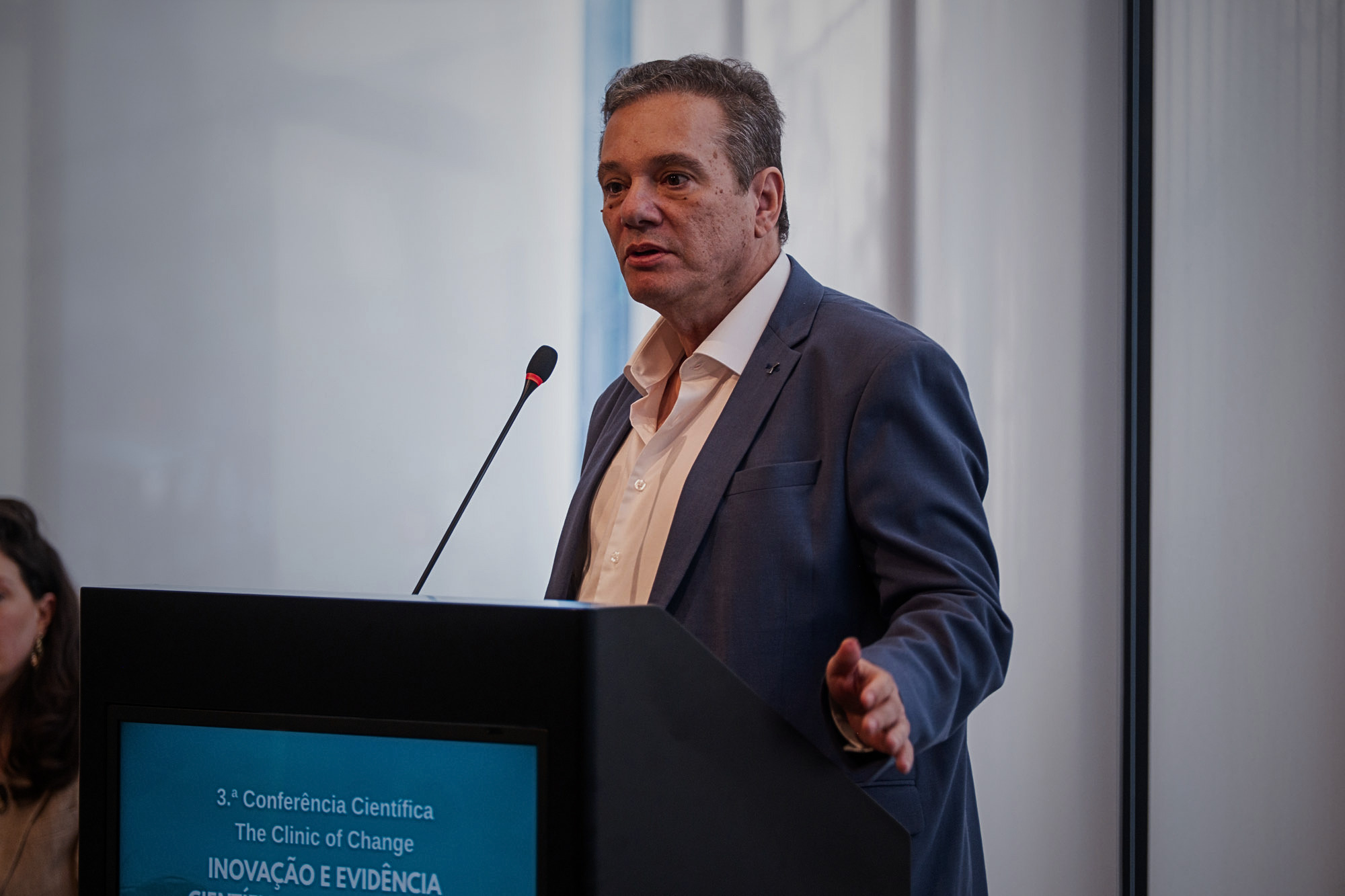

Psychiatrist and psychotherapist Prof. Dr. Victor Amorim Rodrigues, clinical director of The Clinic of Change, gave an interview to HealthNews, published on June 9, 2026. The conversation covered topics such as the neurobiological mechanisms of ketamine, the clinical results achieved at The Clinic of Change over the past three years, and the challenges of integrating these therapies into the National Health Service. With decades of experience in psychiatry and psychotherapy, Victor Amorim Rodrigues is one of Portugal’s most respected authorities on the use of psychedelic substances in the treatment of depression and other mental health disorders.
How does ketamine work to treat depression?
The starting point is neurobiology. Amorim Rodrigues explains that ketamine acts as an antagonist of NMDA glutamate receptors, rapidly promoting synaptogenesis—the growth of new synapses—in brain regions critically affected by depression, such as the prefrontal cortex and the hippocampus. This effect occurs within hours, unlike conventional antidepressants, which take weeks to produce results. The substance also disrupts the rigid patterns of the Default Mode Network—the brain network that, in depression, fuels rumination and persistent negative thinking—creating a window of greater cognitive flexibility. It is within this window that psychotherapy takes effect. “Neuroplasticity opens the window; psychotherapy guides what is done with it, ” summarizes the psychiatrist.
The clinical results from The Clinic of Change support this approach. In a retrospective study of 98 patients, response rates were 69% for depression and 68% for anxiety —figures that, according to the psychiatrist, are well above what the literature reports for conventional approaches in cases of treatment-resistant depression, where remission rates rarely exceed 30%. For the clinical director, the difference lies not only in ketamine’s mechanism of action but in the integrated intervention model: “We don’t treat the molecule in isolation; we treat the person within a structured therapeutic context.”
This process is structured in three phases. Before administration, two preparatory sessions allow for the establishment of the therapeutic alliance and an assessment of the patient’s psychological landscape. During the session, the therapist’s presence is active—whatever emerges, whether memories, emotions, or insights, is treated as therapeutic material. Then comes integration: the sessions following the experience are, according to the specialist, “probably the most important and most neglected phase ” in models that focus solely on the pharmacological effect. “Without it, the effects tend to be partial and to wear off more quickly, ” he warns. Follow-up continues for up to one year after treatment.
What other mental health conditions can be treated with psychedelics?
The application of this approach extends beyond depression. Victor Amorim Rodrigues cites promising results in the treatment of alcohol use disorder using the KARE protocol, developed at the University of Exeter, which is already being implemented at The Clinic of Change. He also points to the potential of psilocybin for anorexia nervosa—a condition for which there are no approved medications and which has the highest mortality rate of all mental disorders—although he acknowledges that research is still in a very early stage and that the use of psilocybin is not yet permitted in Portugal.
On the political front, Amorim Rodrigues does not hold back on his criticism. He cites Norway and France as examples of innovation in the regulation of psychedelics—the former funded ketamine for treatment-resistant depression; the latter took specific steps to address cases of severe suicidal ideation —and argues that Portugal is well-positioned to follow the same path. The tradition of pragmatism that underpinned the decriminalization of drugs in 2001 could, he says, apply here as well. But he is blunt about what is missing: “What may be lacking is the political will to ensure that mental health is no longer underfunded and no longer treated as the poor relation of medicine.” For those who have exhausted conventional options, he concludes, these therapies are not an experimental alternative—they are a second chance.
Read the full interview HERE.