

In an article published on November 19, 2026, SAPO examined Transcranial Magnetic Stimulation (TMS), a treatment option for treatment-resistant depression, from two perspectives: that of a patient who underwent the treatment at The Clinic of Change and that of Dr. Lucio Silva, a psychiatrist at the clinic.
The article, written by journalist Joana Petiz, explains how TMS works, who it is intended for, and what changes, in practice, in the lives of those who undergo it.
Testimonial: How TMS Helped Joana with Depression and COPD
Joana, 30, has lived with depression since she was 17. Later, other problems arose: anxiety and Obsessive-Compulsive Disorder (OCD). She was under psychiatric care and gradually adjusted her medication, but, as she told SAPO, she always felt “a sense of emptiness and sadness.” She felt like she didn’t recognize herself.
She heard about TMS while seeking help for her boyfriend. His condition wasn’t a candidate for the treatment, but hers was. She overcame her fears and committed to daily sessions, Monday through Friday, which she managed to fit in around her work.
The first few days weren’t easy, but the change came faster than usual. After a week, she realized she was different: “Little lights started to come on.” She describes a new way of seeing herself and the world, with greater self-esteem and more strength.
The impact was felt in various areas of his life:
- Fewer COPD symptoms and more time for yourself: “I’d forgotten what it was like to have time!”
- Spending more time with family and living in the moment, with greater peace of mind.
- Knowing when to stop—after going through a burnout, she says she now recognizes when she needs to rest.
Joana finished her treatment last summer and continues to receive follow-up care, because she considers it essential “so the lights don’t go out again.” She also emphasizes that the health insurance reimbursement has made the treatment more affordable.
What Psychiatrist Dr. Lucio Silva Explains About TMS
Dr. Lucio Silva is a psychiatrist at The Clinic of Change. He holds a specialty certification in Psychiatry and Mental Health from the Hospital-Based Medical Career Track and is internationally certified as a Clinical TMS Practitioner. In the SAPO article, he explains the treatment and makes its limitations clear.
How Does Transcranial Magnetic Stimulation Work?
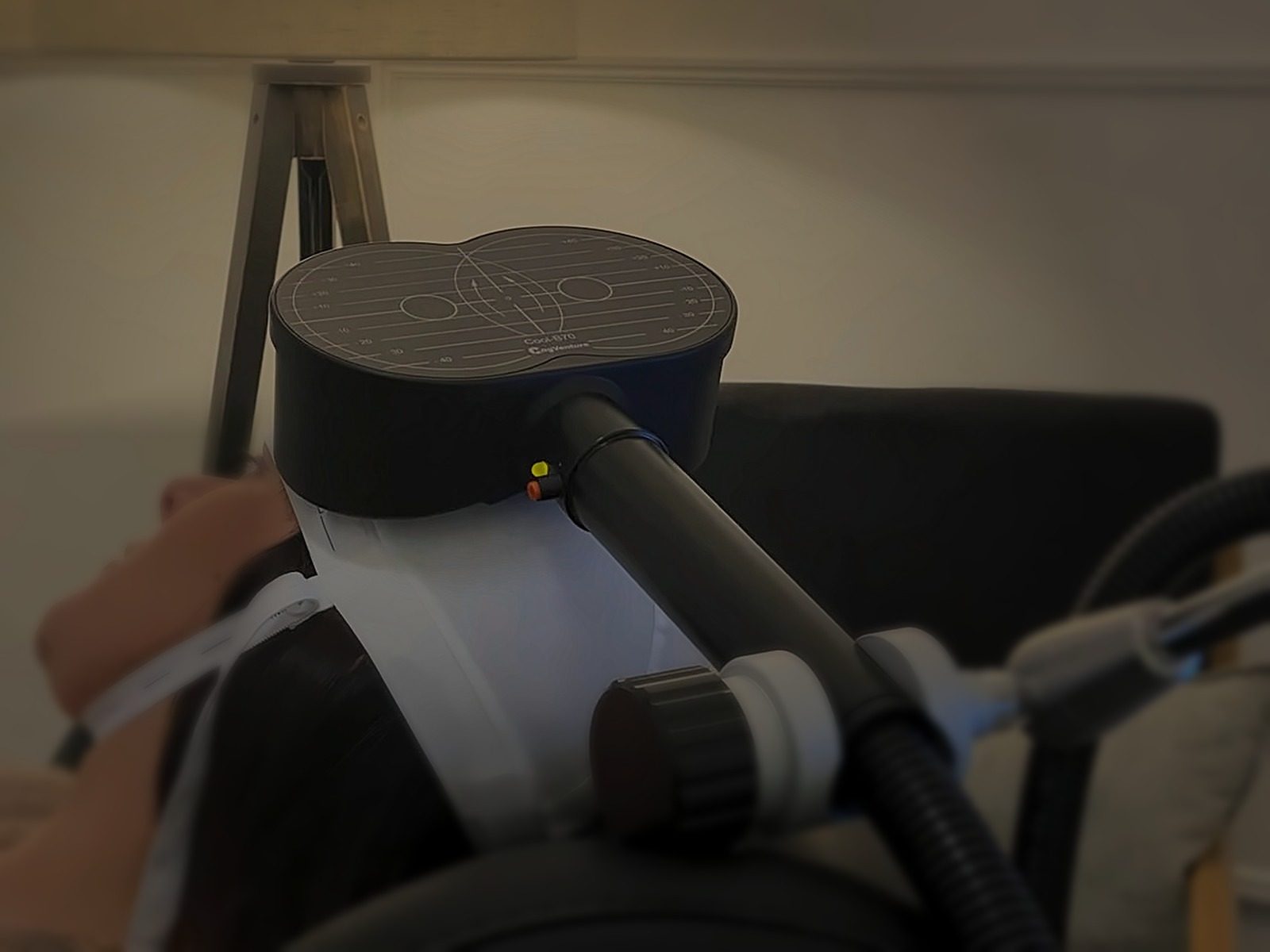
TMS is a noninvasive technique that uses magnetic pulses to modulate activity in specific areas of the brain. The physical principle is similar to that of wireless charging for a cell phone: electromagnetic induction.
According to the expert, the difference compared to medication lies in the mechanism of action. Antidepressants affect communication between neurons and can have effects on other organs. TMS acts locally on neuronal activity and plasticity. He sums up the idea with an analogy: neurons are like musicians playing in a disorganized manner, and TMS is “the conductor trying to regulate the rhythm.”
Does TMS cure depression?
No, and the psychiatrist emphasizes this. A cure would require treating the root cause of the problem, which may be genetic, psychosocial, or something else. TMS is a treatment that can be used to complement medication or as an alternative, depending on the case.
Who is TMS recommended for?
Depression is the primary indication, but TMS is also used for POC and depression with anxiety. The protocol depends on the clinical presentation:
- Depression: In many cases, there is reduced activity in the left prefrontal cortex. A higher frequency is applied in sessions lasting about 3 minutes.
- Depression with anxiety: the right prefrontal cortex is overactive. A lower frequency is used in sessions lasting 20 to 30 minutes.
Not all patients have the same brain patterns. Therefore, the initial evaluation may lead to the selection of a different target or protocol.
How long does TMS treatment last?
A full course of treatment consists of at least 30 sessions, ideally five per week. Improvements usually begin to appear after the 15th session. Patients are reevaluated every 15 days to adjust the treatment.
According to the expert, many patients describe a new way of thinking at this stage, one that breaks free from the cycle of rumination. This is the ideal time to work with a psychotherapist, because the brain is more receptive to learning new behaviors. Clinical follow-up continues after treatment ends.
Does TMS have side effects?
Because it is localized, TMS avoids the systemic effects of medication and does not require anesthesia, injections, or other invasive procedures. During sessions, there may be some discomfort, such as muscle contractions, headaches, or numbness, and, in more sensitive individuals, nausea.
The risk of a seizure is very rare—about 0.002% per session—and the initial medical evaluation further reduces this risk. During treatment, the patient maintains their normal routine but should avoid alcohol and other substances that alter brain excitability.
Read the full article
The full article, written by Joana Petiz, is available on SAPO: 8 Minutes to Fight Depression.
About TMS at The Clinic of Change
At The Clinic of Change, treatment recommendations are always based on a clinical evaluation. Contact us and check our agreements with insurance providers that cover Transcranial Magnetic Stimulation—the Médis and Multicare. The first step is always the beginning of change.
Read more about our TMS program HERE.