
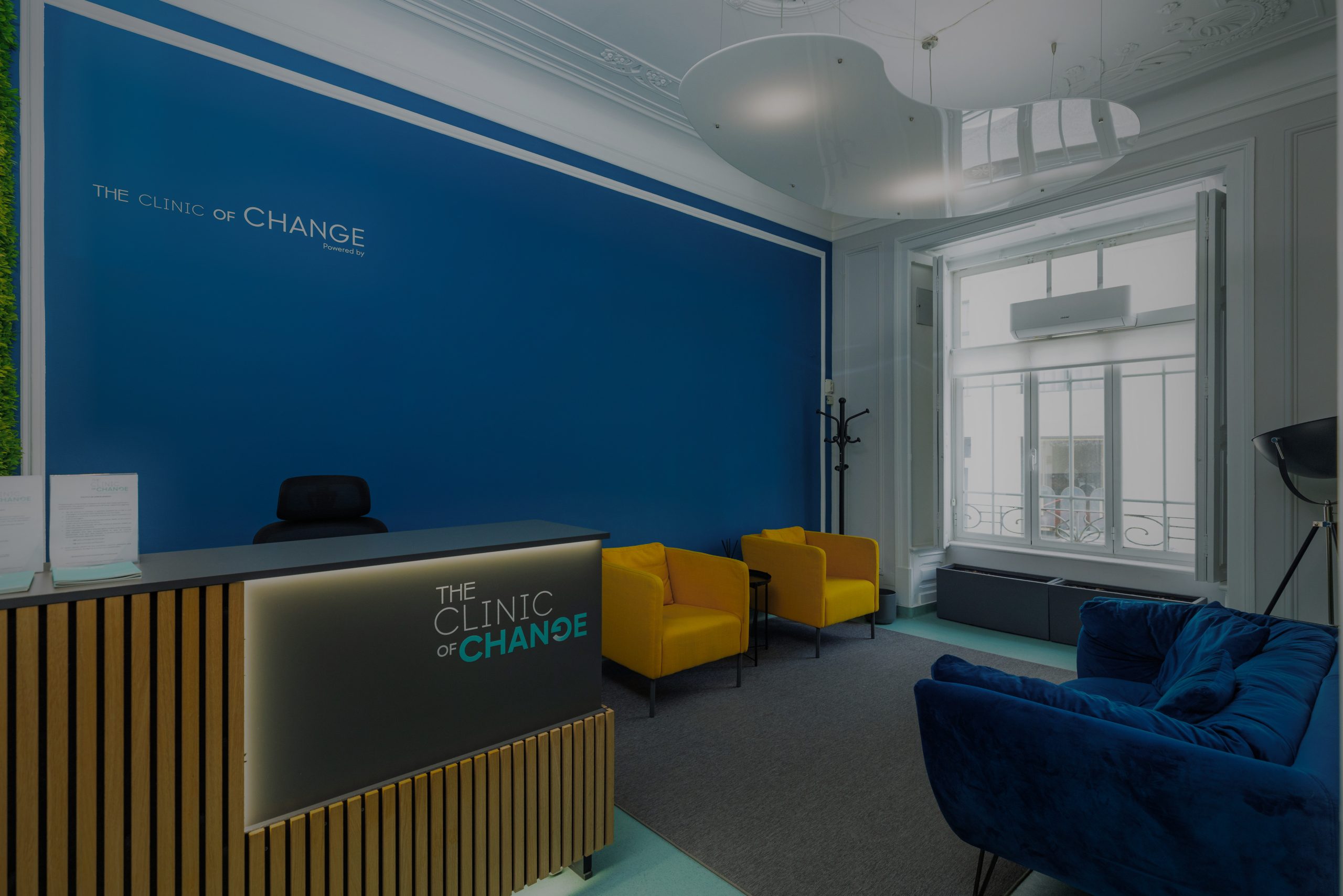

Transcranial Magnetic Stimulation (TMS) is currently one of the most promising approaches in contemporary psychiatry—and TMS sessions at The Clinic of Change, a mental health clinic in Lisbon, are now covered by Médis. For those seeking treatment for Treatment-Resistant Depression, Anxiety, Obsessive-Compulsive Disorder (OCD), or Addictive Behaviors, this change has a direct impact on access to innovative and scientifically validated treatment.
What is TMS, and how does it work?
Transcranial Magnetic Stimulation is a noninvasive brain neuromodulation technique that uses pulsed magnetic fields to stimulate specific areas of the brain, modulating neuronal activity in a safe and controlled manner. In practice, it acts on the brain circuits involved in disorders such as treatment-resistant depression, increasing activity in the prefrontal cortex and promoting the functional reorganization of brain networks linked to emotional regulation.
The treatment is performed on an outpatient basis, without anesthesia or sedation. Sessions last between 3 and 37 minutes, depending on the protocol, and are generally conducted five times a week over a period of four to six weeks. The patient remains awake and can resume their normal activities immediately.
Who is it recommended for?
TMS may be particularly indicated in cases of depression that has not responded to previous pharmacological treatments—so-called treatment-resistant depression—as well as in cases of anxiety, obsessive-compulsive disorder, and addictive behaviors, such as smoking or cocaine dependence. Its use always depends on a prior clinical evaluation.
The scientific evidence is solid: international meta-analyses indicate response rates between 50% and 60% for treatment-resistant depression, with remission rates between 30% and 40%. The technique was approved by the FDA in 2008 for treatment-resistant major depression and, in 2018, for obsessive-compulsive disorder. The National Institute for Health and Care Excellence (NICE) in the United Kingdom has also issued favorable recommendations for its use.
What are the advantages compared to other treatments?
TMS has a very favorable safety profile. The most common adverse effects are mild and transient—such as headache or local discomfort—and it is not associated with weight gain, sexual dysfunction, or negative cognitive effects, unlike many pharmacological treatments.
TMS at The Clinic of Change
At The Clinic of Change, TMS is performed according to internationally validated protocols, under the continuous supervision of a psychiatrist and using certified equipment. The treatment incorporates a multidisciplinary approach that ensures safety, technical precision, and clinical monitoring at every stage of treatment.
Médis’s coverage represents an important step toward democratizing access to TMS in Lisbon and throughout Portugal, making this innovative treatment more accessible to those who can benefit from it. To find out if you’re eligible, the first step is a clinical evaluation. Contact us.
Want to learn more about TMS?
In May, three experts from The Clinic os Change answered all questions about Transcranial Magnetic Stimulation. Watch the Change Talks webinar dedicated to TMS.