
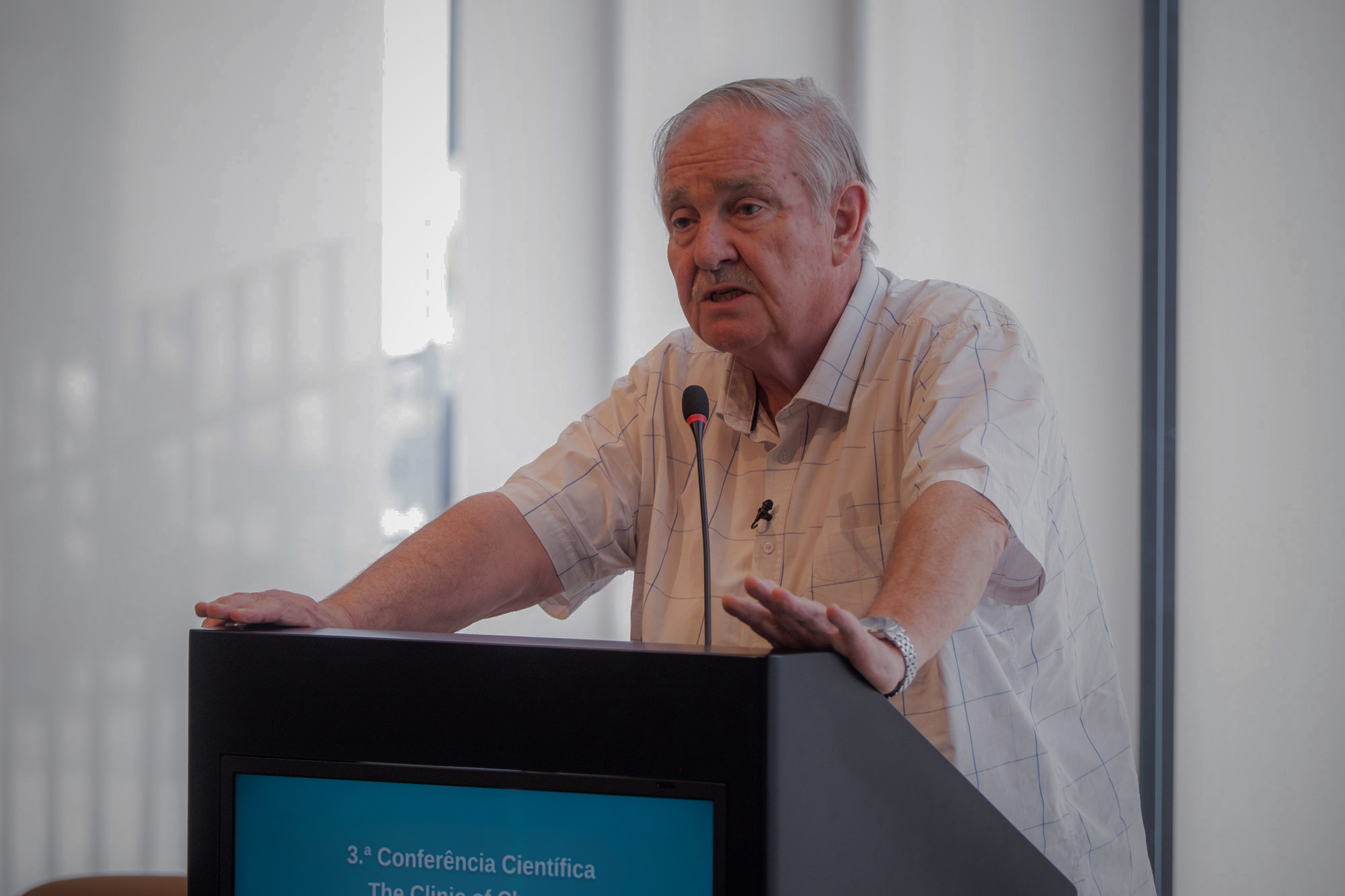

British psychiatrist David J. Nutt was in Lisbon for the 3rd Scientific Conference of The Clinic of Change, where he discussed the scientific evidence regarding the impact of psychedelics on mental health. In an interview with SÁBADO magazine, published on June 2, 2026, the neuropsychopharmacologist from Imperial College London—who has spent half a century researching brain function—argued that substances such as psilocybin, MDMA, and ketamine could transform the treatment of depression and other mental disorders—and that the obstacles they face are political, not scientific.
His research group’s first studies date back to 2010 and were published in *Lancet Psychiatry* in 2016, revealing changes in the brain that have a direct impact on the treatment of depression. Since then, the body of evidence has only grown. Nutt explains that these substances act on the cortex, breaking deeply ingrained thought patterns and promoting what he calls neuroplasticity—the brain’s ability to learn new ways of thinking. In the case of ketamine, the protocol he recommends includes ten sessions combined with psychotherapy and one year of follow-up. The results, he says, are clear: “About 70% seem to do very well.”
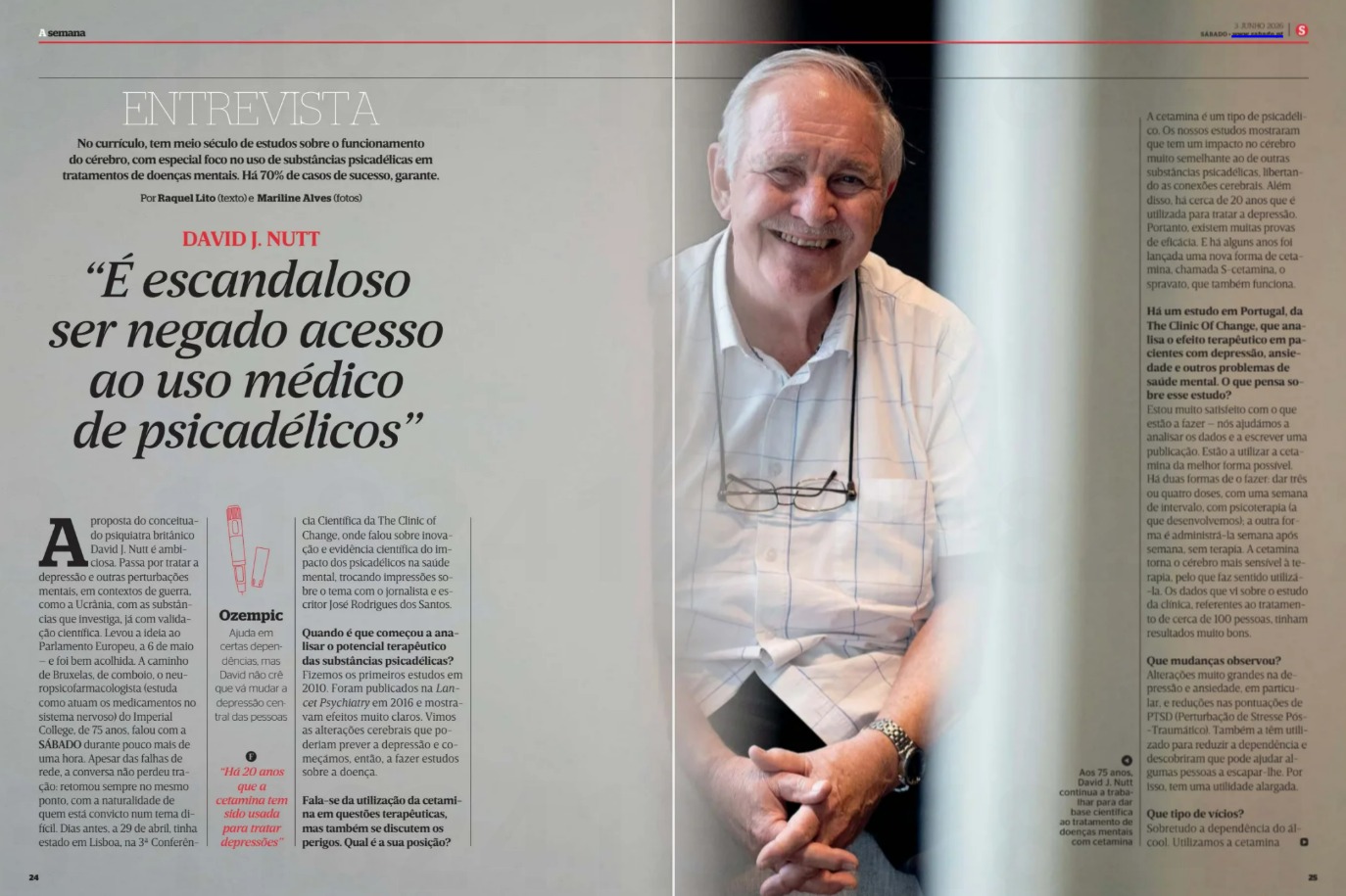
Ketamine acts specifically on the cortex, disrupting deeply ingrained brain processes. Nutt explains the mechanism with a simple analogy: in depression, thinking is stuck in a rut. After treatment, it becomes more flexible. If a negative thought arises, the patient is able to replace it with a more positive one. “The brain becomes responsive to change, ” he explains. It is this state of greater receptivity that makes the combination with psychotherapy so crucial—the substance does not act alone; it sets the stage for the therapy to work.
The clinical utility of these substances extends beyond treatment-resistant depression. Nutt describes significant improvements in patients with anxiety, post-traumatic stress disorder (PTSD), obsessive-compulsive disorder (OCD), anorexia, and alcohol dependence. In all these cases, the mechanism is similar: the substance makes the brain more receptive to therapy, allowing the patient to break free from beliefs and behaviors that were holding them back. “They are able to have more control over their decisions, ” he says, referring specifically to patients with anorexia and OCD. “They are able to engage more fully in therapy and recognize that their behaviors and beliefs are wrong.”
For Nutt, the main obstacle is not a lack of evidence—it is political resistance. Most countries continue to classify these substances in a way that prevents their medical use, ignoring decades of research. “Irrational and unscientific drug policies deny access to drugs like psilocybin, ” he said. “It is scandalous that so many people have been denied access to the medical use of psychedelic substances. That’s 50 years of censorship.” The British researcher believes that governments resist in part because they do not want to admit that people who committed suicide could have been treated.
The issue of safety is a recurring theme in the public debate on psychedelics, and Nutt does not dismiss it. When asked about the death of actor Matthew Perry—known for his role as Chandler on the series *Friends*—who died in 2023 as a result of ketamine abuse, his response is direct: “If he had taken ketamine at a clinic, he would be alive.” The problem, he emphasizes, was not the substance itself—it was the lack of clinical supervision. Perry was taking ketamine at home, unsupervised, and exceeding the recommended doses. This is precisely why Nutt advocates for its use exclusively in a controlled clinical setting, under the supervision of experienced therapists.
On the international stage, he points to Australia as the most progressive country, having authorized the clinical use of psilocybin and MDMA two years ago. Portugal, he notes, has already taken a historic step by decriminalizing recreational drug use, and Nutt argues that it can once again take the lead: “I call on Portugal to remain at the forefront of drug policy reform.” The idea is to reclassify psilocybin and MDMA for clinical use, with experienced therapists and in a controlled environment—just as was done in Australia.
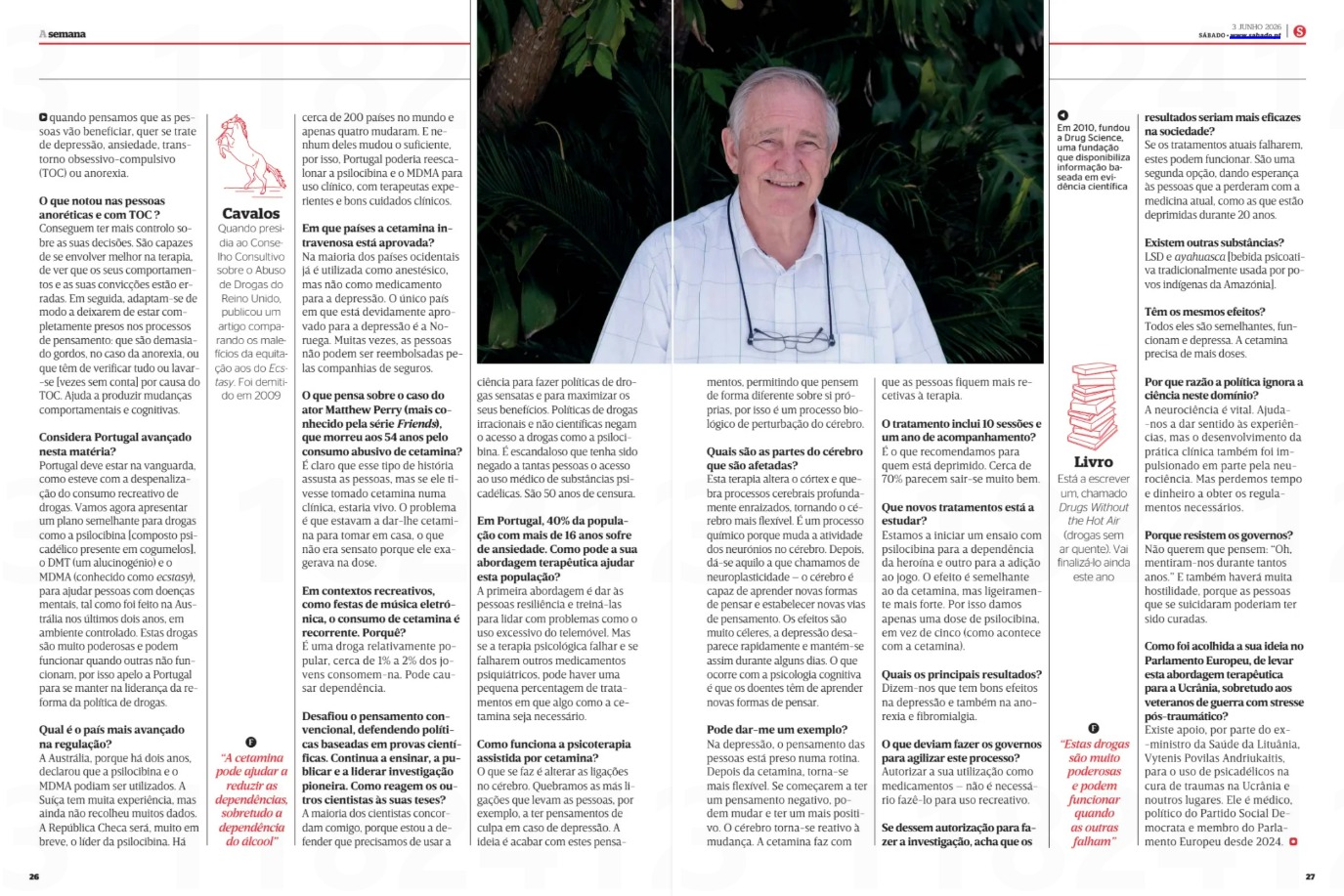
The research continues. Nutt reveals that his group is launching two new trials with psilocybin: one for heroin dependence and another for gambling addiction. The effect is similar to that of ketamine, but slightly more intense—which is why the protocol calls for only one dose of psilocybin, rather than the five doses typically administered with ketamine. Preliminary results also point to benefits for anorexia and fibromyalgia. LSD and ayahuasca, a psychoactive drink traditionally used by indigenous peoples of the Amazon, are also on the research horizon.
The reality in Portugal is illustrated by concrete data: 40% of the population over the age of 16 suffers from anxiety. For Nutt, the answer doesn’t immediately lie in psychedelics. The first line of defense, he argues, is to give people tools for resilience and teach them how to cope with contemporary risk factors, such as excessive cell phone use. Only when psychotherapy and conventional medication fail should substances like ketamine come into play. But when they do, they can make a difference.
Nutt’s ambition also extends to contexts of armed conflict. On May 6, he presented a proposal to the European Parliament to use psychedelics in the treatment of war trauma, particularly among Ukrainian veterans with PTSD—an initiative that was supported by Lithuania’s former Minister of Health and Member of the European Parliament, Vytenis Povilas Andriukaitis. For those who have lost hope in conventional treatments, he concludes, these substances represent a second chance: “They are a second option, giving hope to people who have lost it with current medicine, such as those who have been depressed for 20 years.”
Read the full interview HERE.