

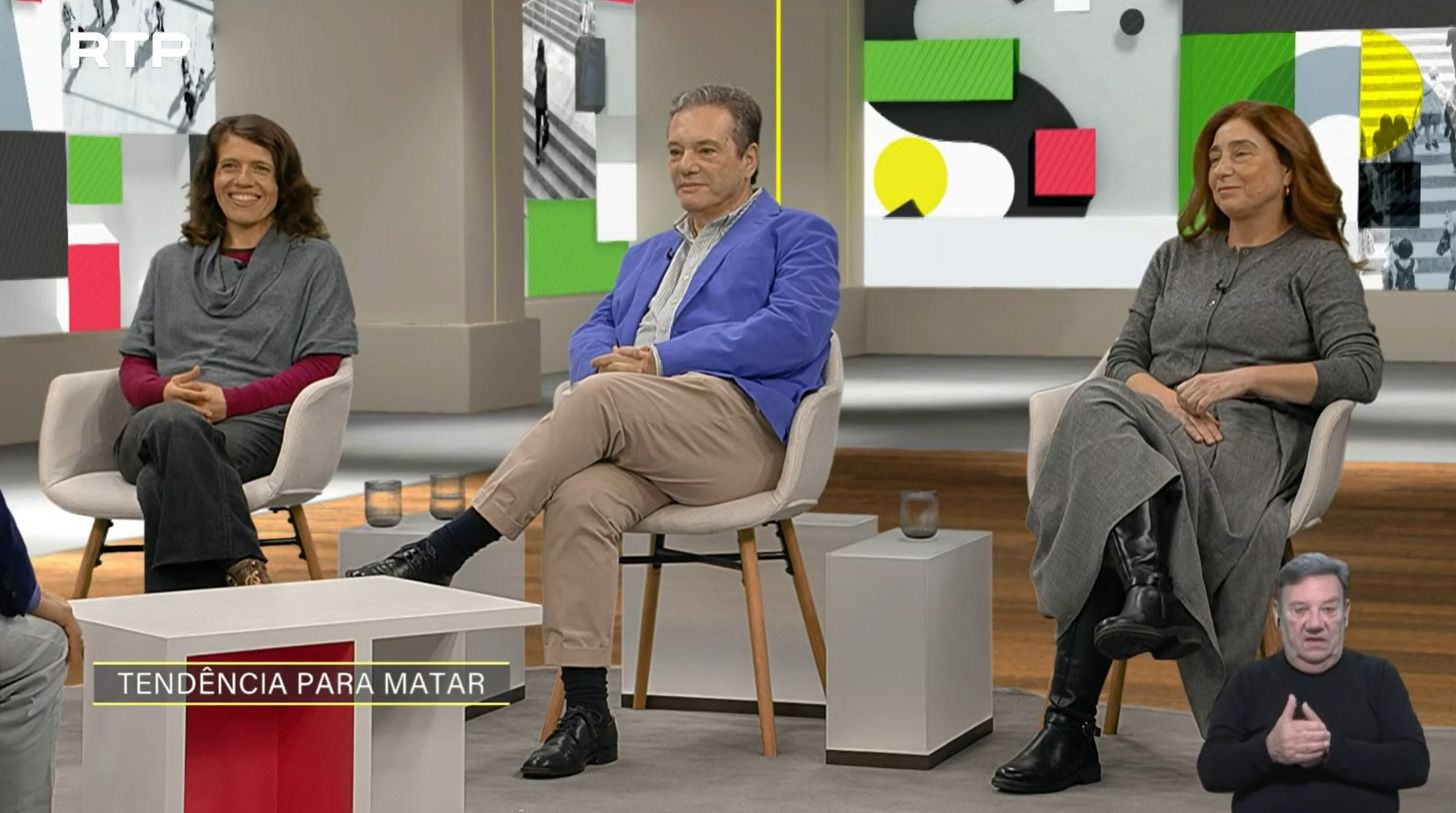

The link between psychopathy and homicide was the central theme of the debate on the April 13 episode of the program *Sociedade Civil* on RTP2, which focused on the topic “The Tendency to Kill.” “Do we all have it, or is there a specific profile?”—the host, Luís Castro, posed this question right at the start of the broadcast. To address the relationship between mental health and homicide, the program brought together a panel of experts, including Prof. Victor Amorim Rodrigues, MD, Clinical Director of The Clinic of Change, in his capacity as a psychiatrist and psychotherapist.
“There is no such thing as a ‘predatory impulse.’ What we do have are a variety of extreme circumstances—not least because most homicides are not predatory in nature; those are in the minority. Most are situational crimes linked to organized crime, for example. There are also some linked to psychopathy, but they are not the majority,” Victor Amorim Rodrigues begins by explaining.
“What I mean by psychopathy is a relational style that is always based on the exploitation, manipulation, and abuse of others. And it involves a lack of guilt. Psychopaths are incapable of feeling guilt, and this means they have no internal boundaries,” adds the expert, who was joined on the panel by neuroscientist and researcher Diana Prata and forensic psychologist Cristina Soeiro.
“There are many myths about psychopathy. It’s a concept that has become ingrained in public opinion and is used for everything and nothing. Yet it’s a concept that doesn’t even exist in international mental health classifications. It stems primarily from the fields of forensic psychiatry and psychology, dating back to the 1950s. Therefore, it’s a concept that must be used with great caution, ” argues Amorim Rodrigues during the conversation.
You can watch the conversation live on RTP2 HERE.