
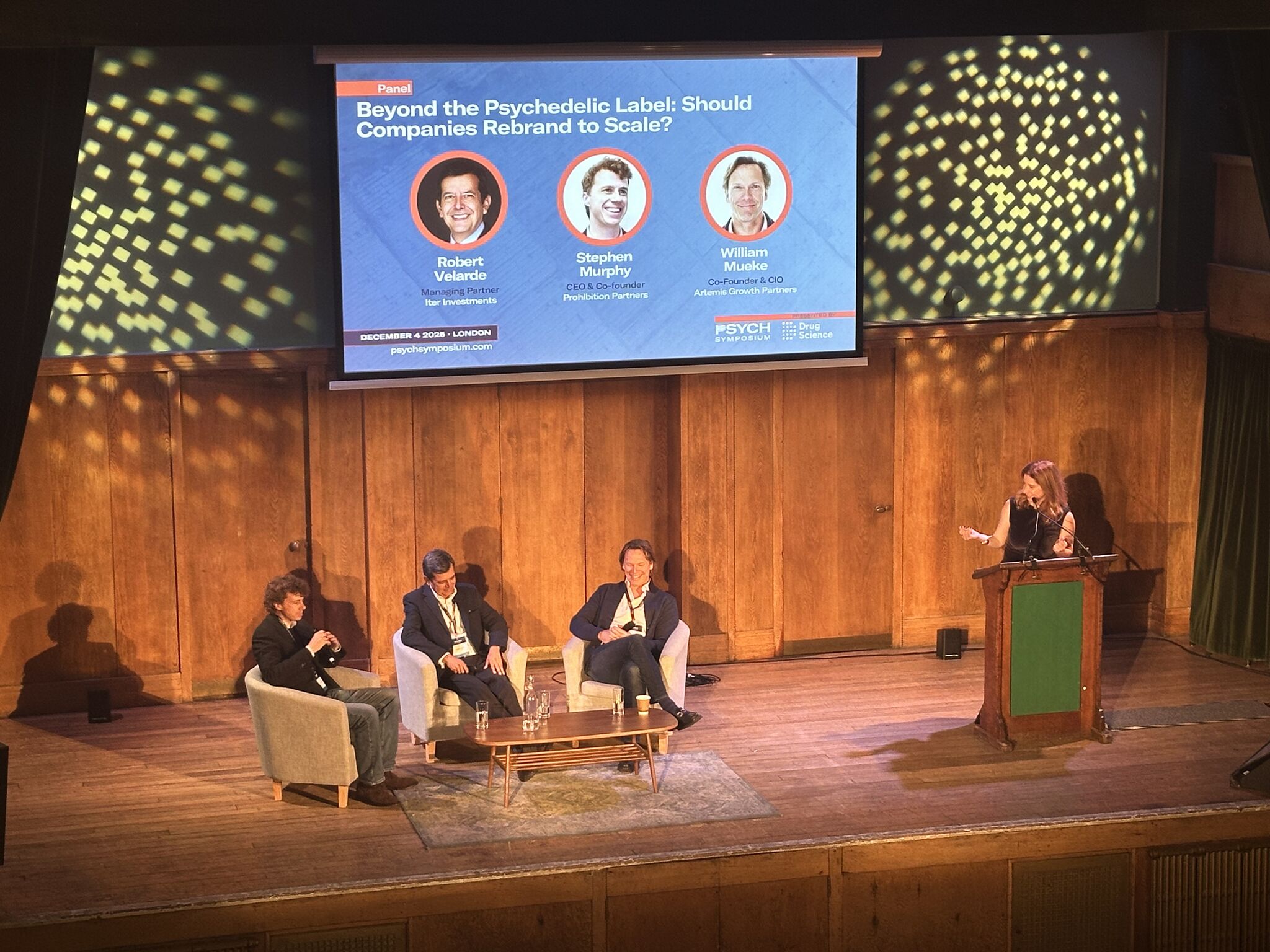

In London, experts and business leaders gathered to discuss advances in psychedelic therapies.
On December 4, the Psych Symposium brought together doctors, scientists, and business leaders at Conway Hall in London to discuss the promising results of using psychedelic substances in the field of mental health. Organized by Drug Science, a British advisory body on pharmaceuticals, it is Europe’s leading conference dedicated to the use of psychedelics in the treatment of mental health conditions.
What conditions can be treated with psychedelics?
From ongoing studies to strategies for making proven therapies available to a wider audience, various panels shared and discussed promising solutions—as well as challenges that still lie ahead—in treating conditions such as anorexia, treatment-resistant depression, post-traumatic stress disorder, opioid abuse, and even in the context of couples therapy.
“Over the course of a day, the event brought together ‘leading researchers, clinicians, policymakers, and investors from across Europe to examine how psychedelics can shape the future of mental health care,’” the organization said in a statement. “With evidence pointing to the safety and efficacy of psychedelic treatments, events like this are essential in creating an effective and responsible model for their adoption in the UK and internationally,” it added.
The Clinic of Change was in attendance and observed firsthand the exchange of ideas regarding some of the most significant and ambitious studies and strategies in the field of psychedelic-assisted therapies.
What do mental health experts say?
Among the guest speakers was David Nutt, a psychiatrist and one of the world’s leading experts in psychedelic medicine, who currently heads the Centre for Psychedelic Research at Imperial College London, where he is a professor of neuropsychopharmacology. One of the topics Nutt addressed was the potential for universal health care to incorporate psychedelic-assisted therapy.
Professors Sunjeev Kamboj and Val Curran from University College London, along with Luisa Liberati, presented their latest study on MDMA-assisted psychotherapy in collaboration with Drug Science. Celia Morgan, another leading figure in the field of research into the effects of psychedelics on mental health—particularly in the treatment of addiction—was also in attendance. Together with other experts, she examined how psychedelics are already being used in clinical and non-clinical settings in the UK and Europe.
Another highlight of the conference was a panel discussion featuring researchers Hannah Thurgur and Sara Reed, Louise Paterson, a professor of psychopharmacology and psychiatry, and journalist Claudia Canavan, which focused on psilocybin therapy for opioid use disorder.
Nadya Lisovoder of Shortwave Life Sciences was one of the key figures at the Psych Symposium , where she presented a groundbreaking study on psychedelic-assisted treatment for anorexia using psilocybin.
Learn more about our psychedelic-assisted treatment programs HERE.